Avoiding an annual fee might seem like a small saving, but across a lifetime of card ownership it adds up. For UAE residents who pay their statement balance in full each month, a genuinely free credit card delivers rewards, protections, and convenience at no ongoing cost. The challenge is telling a truly lifetime-free card apart from one that charges you the moment your spending dips below a threshold.
How no-annual-fee credit cards work
A credit card without an annual fee is exactly what it sounds like: a card that does not charge you a yearly membership fee, regardless of how much or how little you spend. However, that does not mean the card costs the issuer nothing to provide.
For Emirates Islamic cards, the revenue model follows Shariah-compliant principles. Rather than charging conventional interest (riba), the bank earns through interchange fees paid by merchants on every transaction and through a pre-agreed profit amount is determined at the time of covered card issuance under a Murabaha-based arrangement. This profit may be applied in certain cases, such as when a customer opts for a payment plan or requests deferment of settlement, and may be waived or adjusted for the relevant period where applicable. Importantly, no additional profit is charged on accrued profit, which aligns with Shariah guidelines.
Beyond the annual fee line, watch for these charges that can quietly add to your cost:
- Foreign transaction fees: on purchases made in currencies other than AED
- Inactivity fees: if the card is unused for an extended period
- Cash advance fees: applied when you withdraw cash against your credit limit
- Commitment to donate: if you miss your minimum monthly payment
The CBUAE Consumer Protection Regulation requires every card issuer to provide a one-page Key Facts Statement (KFS) before account opening, disclosing all fees clearly. Reading this document is the single most effective way to spot hidden costs. We publish KFS documents for all our covered cards. Always review yours before applying.
Core 'free for life' features to track
Not every no-fee card is unconditionally free. The distinction between a truly lifetime-free card and a conditionally waived one is significant. A lifetime-free card charges no annual fee, while a conditionally waived card charges an annual membership fee that is waived only when specific spending requirements are met. If you fail to meet the required spend threshold, the annual fee applies according to the card's terms and conditions.
Use the checklist below when evaluating any no-fee card:
| Feature to check |
What to look for |
Why it matters |
| Annual fee waiver terms |
Unconditional vs. minimum-spend condition |
Determines whether "free" is truly free |
| Supplementary card fees |
Separate fee per additional cardholder |
A hidden annual cost for families |
| Profit-free period |
Number of days before profit applies |
Affects cost of carrying a balance |
| Cashback or rewards expiry |
Validity window for earned rewards |
Unused cashback has zero value |
| Minimum spend to earn rewards |
Monthly or annual threshold |
Sets the bar for activating your benefits |
| Balance transfer fees |
Percentage or flat charge |
Relevant if consolidating existing balances |
Best cards with no annual fee in 2026
Here's a look at our no-fee range across four criteria: rewards rate, profit structure, lifestyle perks, and accessibility.
directions_car
10% cashback on fuel
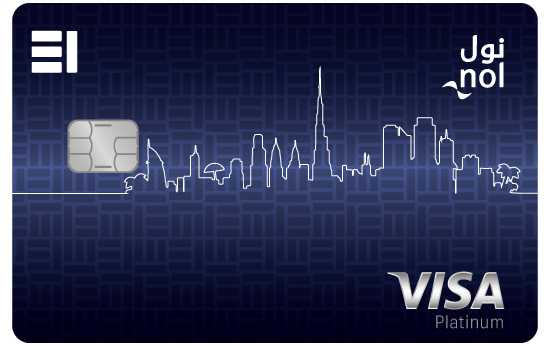
Emirates Islamic RTA Covered Card
Suits daily commuters and drivers. Earns 10% cashback on fuel and RTA transport payments, 2.25% on international spending, and 1.25% on domestic spending. Includes a built-in Nol chip for metro, bus, and parking payments.
View card details →
flight
2.25 EI SmartMiles / AED 1
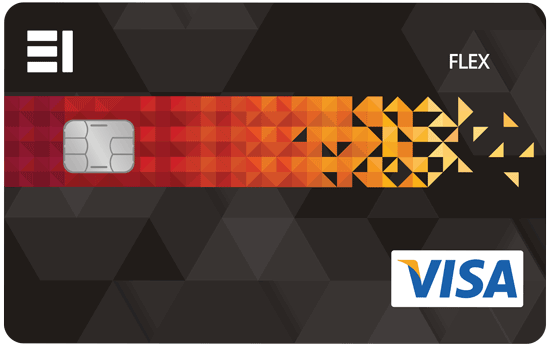
Emirates Islamic Flex Covered Card
Built around travel miles. Earns up to 2.25 EI SmartMiles per AED 1 spent, redeemable against any purchase at over 300 airlines and 180,000+ hotels, with no blackout dates.
View card details →
badge
UAE nationals only
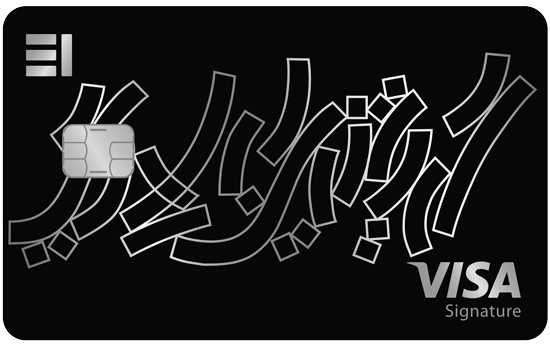
Emirates Islamic Emarati Covered Card
Exclusively available to UAE nationals. Offers up to 3.75 EI SmartMiles per AED 1 spent with no annual fees, plus airport lounge access at over 1,200 lounges and valet parking service.
View card details →
shopping_cart
No earning cap
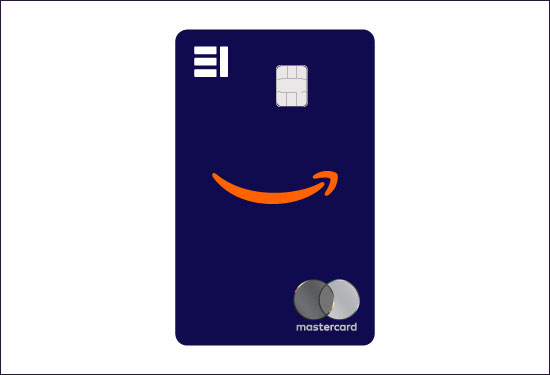
Amazon Mastercard Covered Cards (World and Platinum)
We are the first bank in the Middle East to launch an Amazon co-branded card. Both cards carry no annual membership fee and earn cashback on Amazon.ae purchases, with no monthly or annual earning cap. The Platinum variant includes four complimentary airport lounge visits.
View World card → View Platinum card →
Selecting the right no-fee card for your spending profile
The best no-fee card is the one that earns the most on what you already spend, without requiring you to change your habits to justify the rewards.
Follow these steps to find your match:
- Map your biggest spending categories: Are you spending most on fuel, groceries, online shopping, dining, or travel? Identify your top two categories.
- Check your credit profile: The Al Etihad Credit Bureau assigns every UAE resident a score between 300 and 900. A strong score improves your approval chances and the credit limit you receive.
- Estimate your monthly settlement ability: If you pay your full balance each month, profit rates become largely irrelevant. If you carry a balance occasionally, factor the profit charge into your card cost.
- Match your profile to a card: Use the scenarios below as a starting point.
Here is how different spending profiles map to our no-fee range:
| Spending profile |
Recommended card |
Reason |
| Daily commuter or driver |
RTA Covered Card |
Fuel cashback; built-in Nol chip for transit |
| Frequent traveler |
Emarati Covered Card (nationals) or Amazon World Covered Card |
High international earn rate; lounge access; travel Takaful |
| Online shopper |
Amazon Platinum Card |
Cashback on Amazon.ae; no earning cap |
| Credit builder |
Any no-fee card with AED 5,000 salary requirement |
Low barrier to entry; responsible use builds AECB history |
Review the terms on your chosen card at least once a year. Issuers can update rewards structures, minimum spend thresholds, and partner offers. What worked for your lifestyle in year one may not be the best fit in year three.
Annual fee credit cards vs no-fee cards: cost and value
A fee-bearing card only makes sense if the value of its benefits exceeds its annual fee. If you rarely use perks such as lounge access, travel Takaful, or concierge services, a lifetime-free card with rewards that match your spending habits may offer better overall value.
Here is a straightforward way to assess the decision:
- Add up the perks you actually use, not the ones that sound good on the card's marketing page
- Compare that figure to the annual fee to see if the card pays for itself
- Factor in minimum spend requirements on conditional-waiver cards: if you fall short one year, the fee applies
The table below sets out the broad trade-offs:
| Features |
No-annual-fee card |
Fee-bearing card |
| Annual cost |
AED 0 |
AED 300–5,000+ |
| Rewards |
Solid earn on key categories |
Often higher earn rates or premium perks |
| Risk |
Low: no cost if usage drops |
High: fee applies even if perks go unused |
| Best for |
Consistent everyday spenders |
High spenders who use all premium benefits |
For most UAE residents who pay their balance in full and want predictable, cost-free rewards, a genuinely lifetime-free card is the more dependable choice.
Application and eligibility checklist for UAE residents
The CBUAE sets a minimum monthly income of AED 5,000 for regular card applicants in the UAE. Some cards within our range carry higher thresholds, so check the relevant KFS document page before you apply.
Gather the following documents before starting your application:
- Valid passport (original and copy)
- Emirates ID (original and copy)
- Residence visa (for expatriates)
- Bank statements for the last three months
- Salary certificate dated within the last 30 days and trade licence
How the application process works at Emirates Islamic
You can apply for a Card via the EI + app or by applying through our website. You need to fill out and submit a form with the relevant details and wait for one of our bank representatives to get back to you and walk you through the next steps. Alternatively, you can also visit one of our many branches to apply for a card.
A few tips to improve your approval chances:
- Keep your AECB credit file clean by settling all existing obligations on time before applying
- Ensure your total monthly debt settlements are well below 50% of your gross monthly salary
- Apply for a card whose salary requirement matches your income level
- Read the KFS carefully to confirm the "no annual fee" status is unconditional, not spend-dependent
Making your no-fee credit card work for you
Choosing a credit card without an annual fee removes one layer of ongoing cost from your financial life. However, the real value comes from matching the right card to your actual spending, tracking the features that protect your rewards from expiry, and settling your balance in full each month so profit charges never enter the picture.
We offer fee-free cards across travel, commuting, and online shopping, each one built around real UAE spending patterns and structured to Shariah-compliant principles. Take the time to compare them, read the KFS, and pick the card that earns on the things you already buy.